
Why Passover Matters Today: The Messianic Story of Redemption from Exodus to Yeshua
The story of Exodus is one of the primary focal points of the Bible. After 400 years of bitter slavery in Egypt, God heard the groaning cries and bitter tears of the children of Israel stuck in Egyptian bondage.
In the desert, God makes His presence known to Moses and gives a command: Go to Pharaoh and tell him to let my people go.
Moses hesitates. Gives excuses. But eventually he listens and obeys.
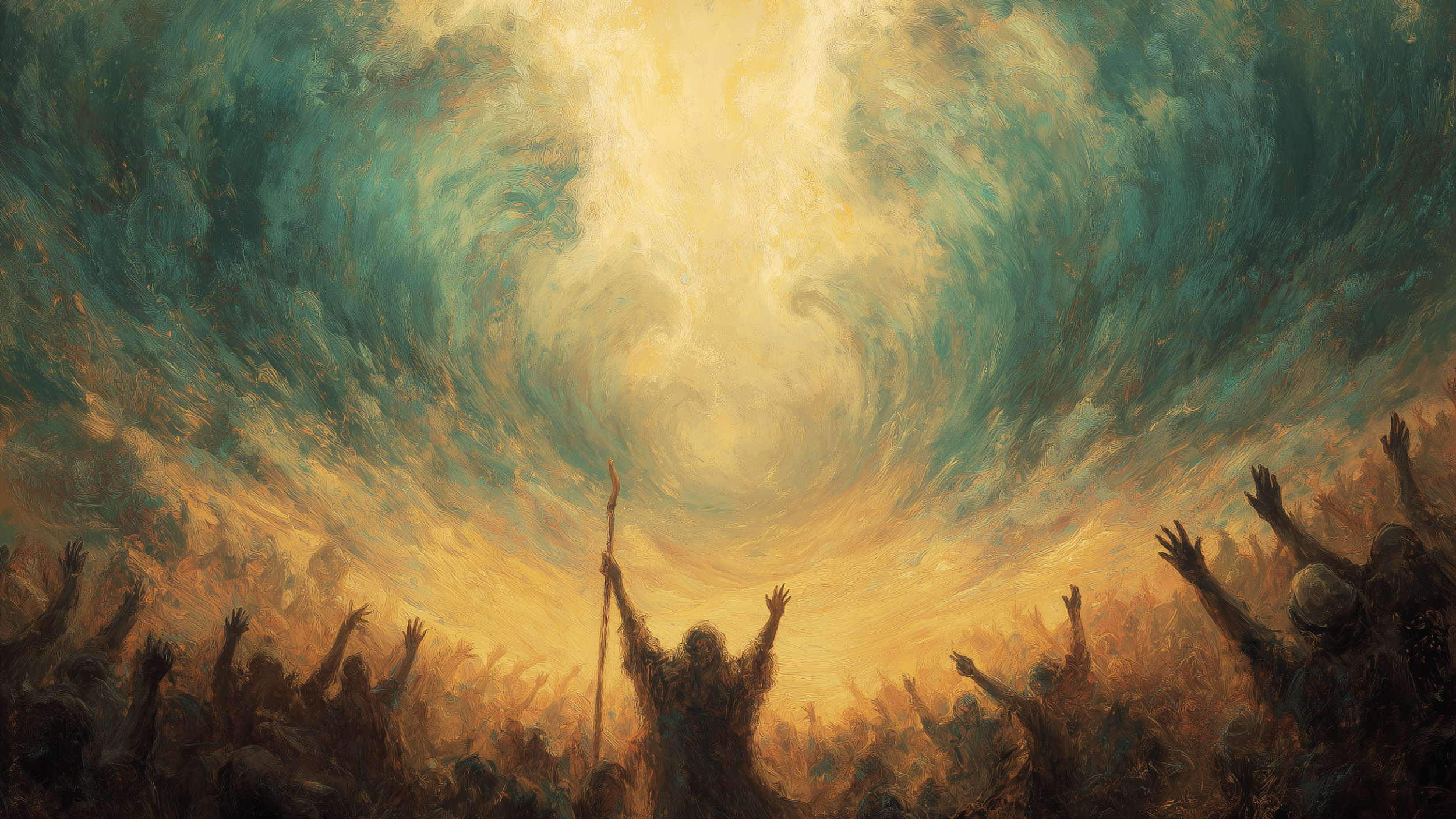
Moses and the children of Israel rejoice in front of the parted sea (AI Image: The Ancienty Way)
After 9 relentless plagues, Pharaoh hardened his heart against the God of Israel. But a hard heart is no match for Adonai, the Lord of hosts. After the tenth plague, Pharaoh is the one who cried bitter tears as He spoke one word: “Go”. The Israelites are free to worship the one true God.
After a miraculous encounter, God splits the Sea of Reeds, allowing over a million Israelites and those who trust the God of Israel to cross through on dry ground. As they are about to claim their freedom, Pharaoh again changes his mind and sent his army of chariots to subdue the children of Israel. At the last minute, God sent the wall of water crashing back down.
Moses and Miriam do the only thing possible to thank the King of the Universe—they sing.
With one voice proclaim His goodness. They sing about the wondrous deeds that Adonai had done to redeem and deliver them. They extol His strength and might. They praise His lovingkindness, and they worship the God of heaven with grateful hearts full of adoration.
The song of Moses and Miriam reverberates through time as a testament to God’s faithfulness.
Another Passover Story
Fast forward 1500 years.
The Romans occupy Jerusalem. The ruling Judean leaders are paid off with handsome sums of money. After the Babylonian exile, Jewish people lived in the diaspora—spread out across the known world. The Hebrew culture has been intertwined with the Greek worldview of the day. Many can no longer read the ancient texts of their scriptures in the original Hebrew.
Sons and daughters of the King of the universe are once again subject to an oppressive regime. The Torah, God’s instruction, is used to oppress—not to heal or bring life and shalom. And once again, the people are talking, praying, and crying out to God. Would he send another deliverer? Would the promised Messiah come, establish his Kingdom, and set them free?
God is Salvation
It is upon this backdrop that a Jewish man called Yeshua, whose name means 'God is salvation,’ was born. Before His birth, an angel of the Lord appeared to His mother, Miriam, and prophesied:
The angel spoke to her, “Do not be afraid, Miriam, for you have found favor with God. Behold, you will become pregnant and give birth to a son, and you shall call His name Yeshua. He will be great and will be called Ben-Elyon. Adonai Elohim will give Him the throne of David, His father. He shall reign over the house of Jacob for all eternity, and His kingdom will be without end.”
—Luke 1:30–33
As He grew up, Yeshua was full of life, often in the temple, teaching others about God. He called people to pursue justice and mercy. Returning the people to a true understanding of the Torah, He taught them how to love God and their neighbors properly. People were amazed at how He taught with both authority and love. The good news was spreading through the countryside.
Four days before the Passover, as many were inspecting their lambs for blemish, Yeshua rode through the streets of Jerusalem on a donkey to fulfill a Messianic prophecy in the Tanakh, “Say to the daughter of Zion, ‘See, your King is coming to you, humble and sitting on a donkey, a colt, the foal of a donkey.” (Isa 62:11 and Zec 9:9).
Charged with excitement and energy, the people celebrated triumphantly with palm branches, pre-emptively shouting echoes of the Hallel from Psalm 118 spoken during the Passover seder meal: “Hoshia-na to Ben-David! Baruch ha-ba b’shem Adonai! Blessed is He who comes in the name of the Lord! Hoshia-na in the highest!”
The people waited with bated breath—could this be the promised Messiah? The anointed one of Israel? The one who was said to bring about redemption and deliverance?
A Passover Seder
One night remains. Yeshua gathers His twelve disciples in an upper room to celebrate a Passover Seder. He tells them in earnest, “I have eagerly desired to eat this Passover with you before I suffer.” (Luke 22:15) In line with Jewish tradition, He raised the matzah and offered up a blessing to God. Afterward, He uttered words that are still with us today: “This is My body, given for you. Do this in memory of Me.” (Luke 22:19)
After they had partaken of the Seder meal, Yeshua held up the third cup of the night, the cup of redemption, and declared, “This cup is the new covenant in My blood, which is poured out for you.” (Luke 22:20)
This cup represented something new—a long-awaited promise from the prophets—a covenant that would write God’s Torah on hearts, not stone. Together, they told the Exodus story. They relived it as if they were present. Having spent three years with the Messiah, they trust that they will see God’s deliverance again in their lifetime.
A greater redemption
Just a few days later, all hope is lost as Yeshua suffered a humiliating and agonizing death on a Roman execution stake. Darkness had won. Slavery continued, and the people mourned as God was silent yet again. But true to His nature, this God, while silent, is never finished. He is not absent, missing, or taking a break. He is always working, moving, and writing a better story.
With a powerful display, the body of this suffering servant, who had been buried in a tomb provided by a wealthy person, cannot be found. After Shabbat, several women visited the tomb only to find two angels of God saying, “Why do you search for the living among the dead? He is not here, but He is risen!” (Luke 24:5–6).
The death of the firstborn has been reversed. This is good news, rooted in the Jewish Passover story of Exodus. Yeshua is the first fruits from among the dead! Victory belongs to this anointed one. Death and sin have been defeated. God’s kingdom is being established on earth. Yeshua declared to them: “So it is written, that the Messiah is to suffer and to rise from the dead on the third day, and that repentance for the removal of sins is to be proclaimed in His name to all nations, beginning from Jerusalem.” (Luke 24:46–47)
Why does the Passover story still matter today?
Despite two amazing stories of redemption, it’s easy to look around and think that not much has changed in the last two thousand years. We're slaves to the clock, begrudgingly working a 9-to-5 at best, or pulling a 2nd shift just to make ends meet.
Maybe the divorce was just finalized, or the business endeavor you poured your soul into failed. You are doing your best to keep a smile on your face for your kids while barely being able to put food on the table.
Slavery.
Bondage.
The story continues, and it's our story. Will a deliverer come to save us and set us free?
And so each year in Jewish tradition, we tell the Passover story again. We don’t have to try too hard to imagine that we’re back in Egypt, because for many, it feels like we are currently living there. The victory over death feels like a broken promise as sickness still ravages, and we have to bury loved ones through bitter tears.
So we tell the story.
We remember God’s faithfulness to come through thousands of years ago. We remember that He heard the cries of His people. We remember that through Messiah Yeshua, He again brought redemption and forgiveness of sins. Through telling the Passover story, we return to God. We strengthen our trust that He is good. We teach our children to remember with hope and anticipation that God is still working and moving in the lives of His people and the nations.
We remember the cup of redemption that Yeshua held up at His last Passover meal. The significance of the new covenant ratified by His blood empowers us today, and we maintain trusting confidence that His victory over death has promised us a final, future redemption.
We remember the words of Yeshua before He ascended to the Father, that one day He will return. One day, as promised, He will return to once and for all establish God’s Kingdom on earth. We remember His parting words to His disciples: “I am with you always, even to the end of the age.” (Matthew 28:20)
The Passover story is our story to tell each year and remember. We join in with our Jewish brothers and sisters and declare that it is God who always brings salvation and deliverance. We celebrate that Yeshua is the first fruits on Resurrection Sunday with our Christian family. We remember God’s goodness to always keep His promises, and with one voice we shout with hopeful anticipation:
“Next year in Jerusalem!”
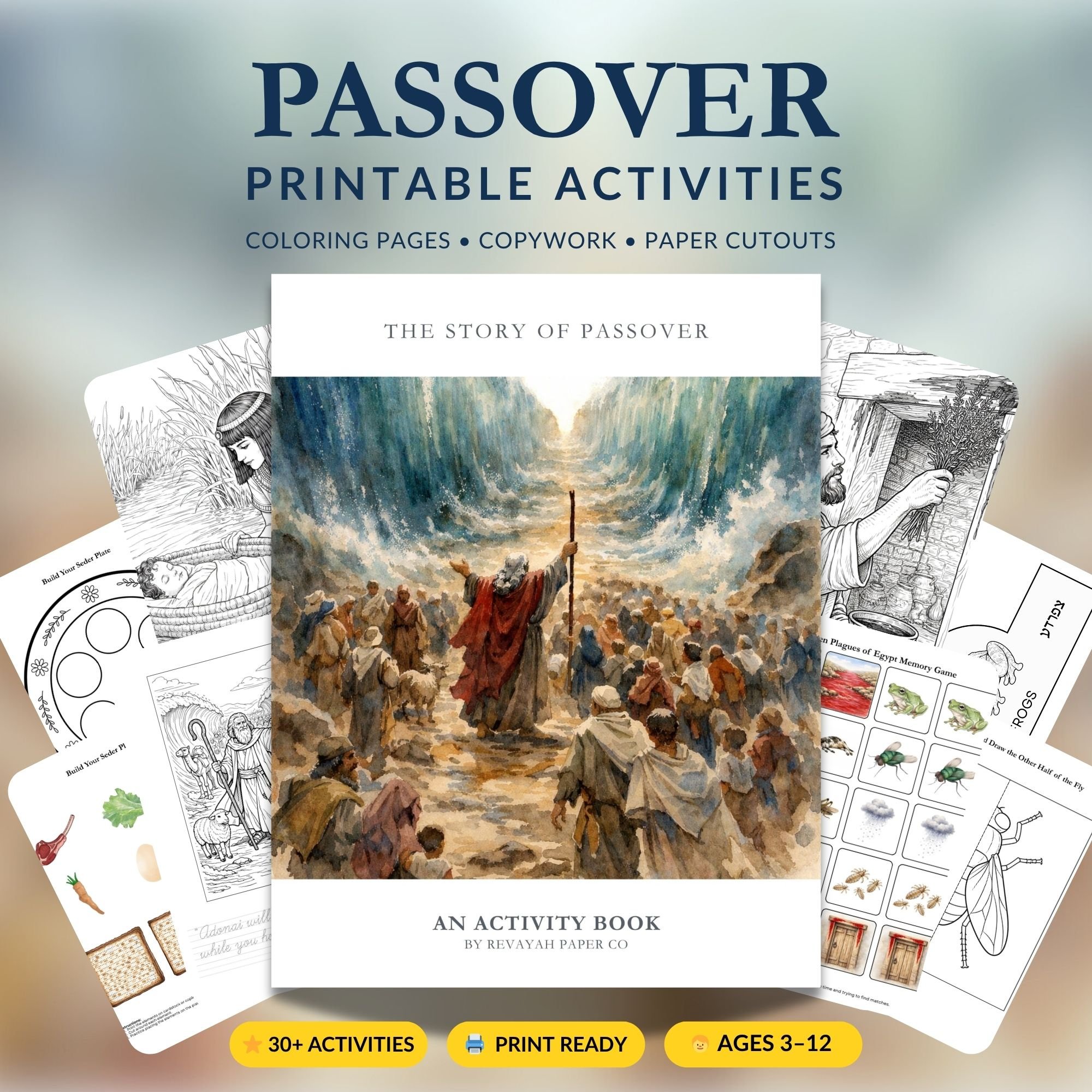
Passover: The Exodus Story
The Shema in Deuteronomy 6:4–9 tells us to diligently teach our children. The Passover story is a perfect time to tell about God’s mighty deliverance of His people.
We partnered with Revayah Paper Co to release a Passover bundle with 30+ pages of printable hands-on activities and crafts designed to help your children engage deeply with the Exodus story.
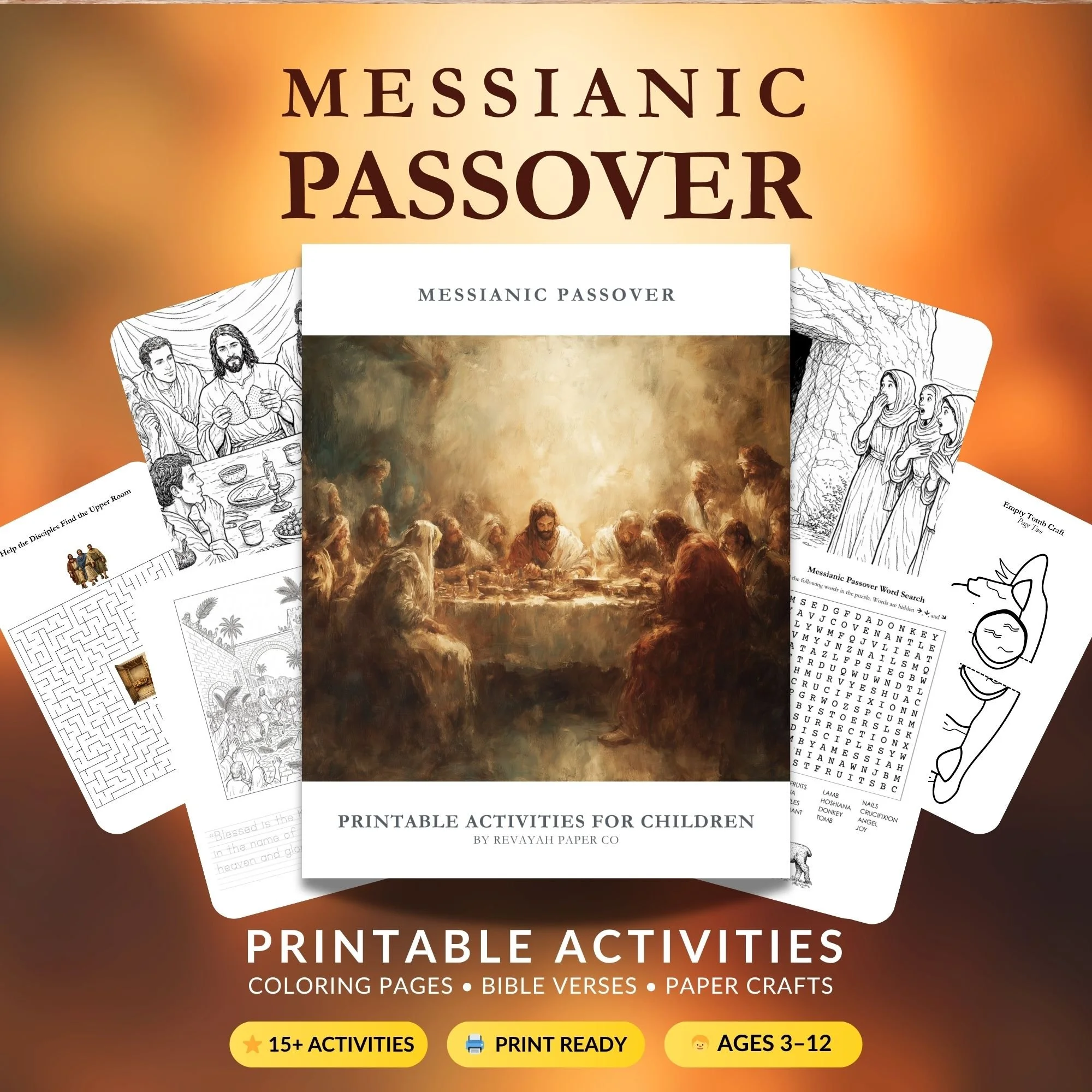
Passover: Messianic Redemption
Help your children walk through the most powerful week in history—from Yeshua’s last Passover seder to His sacrificial death to the Resurrection, when He became the firstfruits among the dead.
We partnered with Revayah Paper Co to release a Messianic Passover printable with 15+ pages of hands-on activities and crafts designed to help your children engage deeply with Yeshua’s last Passover Meal.