

Weekly Torah Portion
Nourish your soul and read this week’s Torah portion, Haftarah, and B’rit Hadashah readings.
Each week, we read through a set portion of the Torah, following the same ancient rhythm Yeshua and His disciples kept. A Torah Portion—or Parashah in Hebrew—is a weekly section of Scripture drawn from the first five books of the Bible, read on a yearly cycle so the entire story is covered from beginning to end. Below you'll find this week's reading, along with its companion Haftarah portion from the Prophets, as well as a Messianic Jewish addition from the Gospels and B’rit Hadashah (New Covenant Scriptures).
This Week's Torah Portion
What Is a Torah Portion?
A Torah Portion is a weekly reading of Scripture, drawn from the first five books of the Bible, that follows an ancient Jewish reading cycle. Known in Hebrew as the Parashah (also spelled parsha), it divides the Torah into fifty-four sections so the entire text is read aloud over the course of a year, beginning each fall anew.
Long before Christianity emerged, this ancient Jewish practice developed so that people would know, understand, and internalize God's instructions. The word Parashah simply means "portion," and it's where we get the English phrase Torah Portion. But this weekly Torah Portion wasn't something a few rabbis dreamed up to get people reading their Bibles more—its roots run much deeper. God Himself commanded Moses and the children of Israel that everyone should hear the Torah read aloud: the men, the women, the little ones, and even the foreigners among them, so they could hear, learn, and take His words to heart (Deut. 31:10–13).
Over the centuries, that command was shaped into the one-year cycle followed today—fifty-four weekly readings, each one read in the synagogue on the Sabbath. The annual Torah Portion cycle begins fresh every year, the week after the fall festival of Sukkot, at the celebration of Simchat Torah, the Joy of Torah.
Each weekly Torah Portion carries a name drawn from the first word or phrase of its passage. The very first portion, for instance, shares the name of the first book of the Bible: B'reisheet (בְּרֵאשִׁית), "In the Beginning," taken right from Genesis 1:1. Alongside the Torah reading is a related passage from the Prophets, called the Haftarah, that echoes the theme of that week—helping us see the threads God was weaving through voices like Isaiah and Jeremiah.
For those of us who follow Yeshua, the weekly Torah Portion is more than a reading plan. It's the very rhythm Yeshua and His early disciples lived by. As you read the Bible through this Jewish lens, week by week, you begin to see the connections between the Hebrew Scriptures and the Gospels come alive—and you realize the whole story God has been telling throughout history.

Learn more about the Torah Portion: An ancient Jewish practice of reading the Bible
Long before Christianity emerged, an ancient Jewish practice developed of reading through the Bible regularly so that people would know, understand, and internalize God’s instructions.
Learn how this structured reading plan, called the Parashah or Torah Portion, can help you understand the Bible like never before.
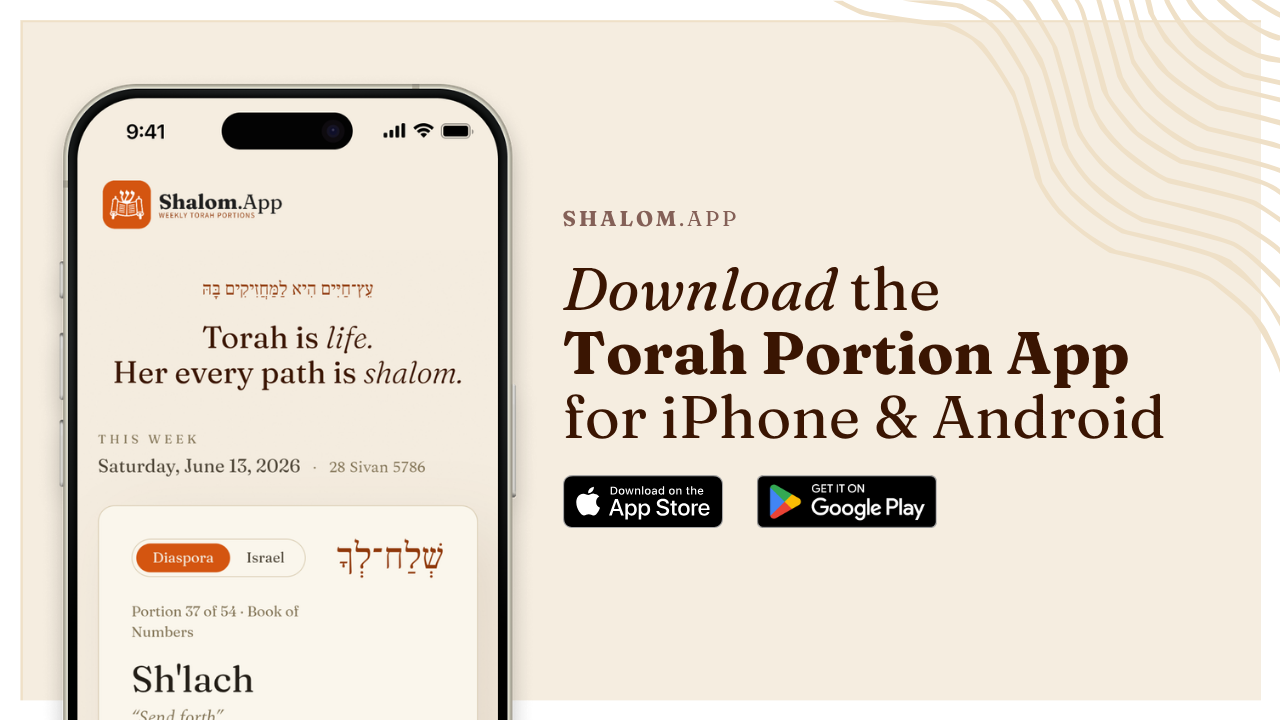
Get the Weekly Torah Portion On Your Phone!
Frequent Asked Questions
-
The Parashah (also spelled parsha) is the Hebrew name for the weekly Torah Portion. The word simply means "portion," and it refers to the section of the Torah read aloud each week as part of the annual Jewish reading cycle.
-
The traditional Torah Portion cycle lasts one year. The Torah is divided into fifty-four weekly readings, and the entire cycle is completed and begins again each fall during the festival of Sukkot, at the celebration of Simchat Torah. Earlier in Jewish history the cycle ran over three or even seven years, but the one-year rhythm is what most communities follow today.
-
The weekly Torah Portion is traditionally read in the synagogue every Sabbath (Shabbat). The new portion then opens the following week, so each week of the year has its own assigned reading.
-
It comes from a command God gave through Moses, that all Israel—men, women, children, and foreigners alike—should regularly hear the Torah read aloud so they could learn it and take it to heart (Deut. 31:10–13). The structured weekly cycle developed over time as a way to faithfully keep that command.
-
The Haftarah is a passage from the Prophets (Hebrew: Nevi'im) read alongside each weekly Torah Portion. It's chosen to echo the theme of that week's reading, connecting the words of prophets like Isaiah and Jeremiah back to the heart of the Torah.
-
Each Torah Portion is named for the first significant word or phrase of its opening verse. For example, the very first portion is called B'reisheet (בְּרֵאשִׁית), meaning "In the Beginning," taken directly from Genesis 1:1.
-
Yes. The weekly Torah Portion was the very rhythm Yeshua (Jesus) and His earliest disciples lived by. Reading the Bible through this Jewish lens helps believers see how the Hebrew Scriptures, the Gospels, and the new covenant all connect—revealing the rich foundation that points to Messiah.
Related to the Torah Portion


Have you ever experienced a Simchat Torah celebration?
Simchat Torah is Hebrew for "Joy of the Torah." In Israel it's combined with Shemini Atzeret (the eighth day assembly). It's the eighth day and final day at the end of seven days of Sukkot.